Main Course
Papet Vaudois
Waadtländer Lauchgemüse · Leek and Potato Stew with Sausage
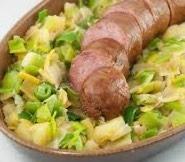
Papet means something like porridge: leeks and potatoes cooked until creamy, the perfect base for a thick Vaud cabbage sausage.
 A Vaud classic
Ingrédients
IngredientsTick off ingredients as you go.
Valeurs nutritives
Nutrition · per serving
| Energy | 5313 kJ / 1281 kcal |
|---|---|
| Fat | 88 g |
| of which saturates | 33 g |
| Carbohydrate | 59 g |
| of which sugars | 19 g |
| Fibre | 16 g |
| Protein | 51 g |
| Salt | 7.4 g |
Counts one cabbage sausage of about 250 g per person.
Estimate for the original amounts, per serving. Salt added to taste is not included. Calculated from the Swiss Food Composition Database (V7.1, FSVO).
Préparation
Directions- 1
Remove a good part of the green from the leeks, then cut and wash them. Peel and dice the potatoes and rinse them. Peel and chop the onion.
- 2
Melt the butter in a cast-iron casserole and fry the leeks and onion for 3–5 minutes.
- 3
Add the white wine and the bouillon cube, season with a little pepper and cook for 15 minutes.
- 4
Add the potatoes, cover with water and cook for about 40 minutes, until the potatoes are done.
- 5
Meanwhile, prick the sausages at the ends with a toothpick. Bring a large pot of water to a boil, add the sausages and cook for 45 minutes.
- 6
Drain any excess water from the potatoes, add the crème fraîche and vinegar, and crush everything with a fork or potato masher.
- 7
Serve with one cabbage sausage per person.
Astuce · Time
Preparation 20 minutes, cooking 45 minutes.

Bon appétit !
En Guete · Buon appetito · Bun appetit · Enjoy your meal
First published in the Arizona Swiss Society's Valley Echo newsletter, Summer 2020.
A bit of history
Histoire
Where Papet Vaudois comes from, gathered from reliable sources such as the Culinary Heritage of Switzerland inventory.
The canton of Vaud's inventory of intangible heritage calls papet vaudois the region's most famous specialty. Its sausage, the saucisse aux choux, is dated to 879 in its protected-origin description, a claim the Culinary Heritage of Switzerland considers hard to verify; such sausages probably became common only in the 19th century. The University of Lausanne's magazine notes that the potato did not spread in Vaud before the famine of 1770, that the name comes from "papette", a Franco-Provençal word for porridge-like dishes, and that papet became popular in the second half of the 19th century. When papet and sausage were first paired is unknown. The dish is eaten from mid-September to April.
Sources
- Papet vaudois · État de Vaud, Inventaire du patrimoine immatériel
- Les origines mystérieuses du papet vaudois · Allez savoir!, Université de Lausanne
- Saucisse aux choux vaudoise (IGP) · Patrimoine culinaire suisse
More from our kitchen
Hungry for more main courses?
Zürcher Geschnetzeltes
Emincé de Veau à la Végétarienne
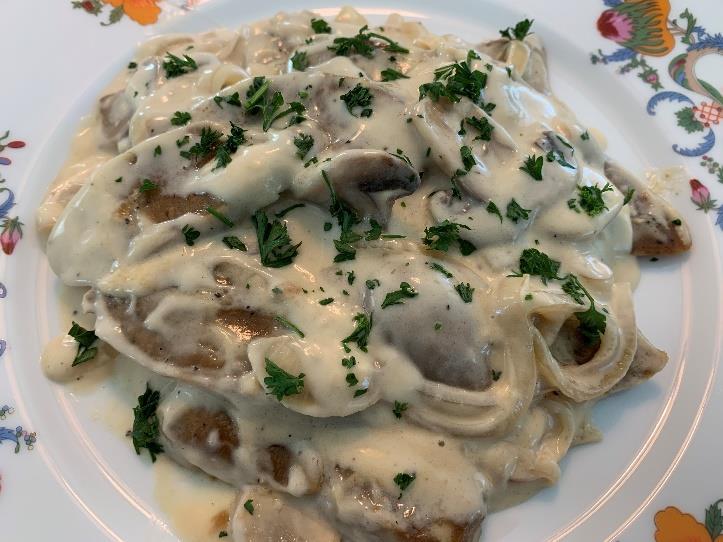
The Zürich classic: tender strips in a mushroom, white wine and cream sauce. Use veal, or make it vegetarian with a substitute such as vegetarian apple sausage.
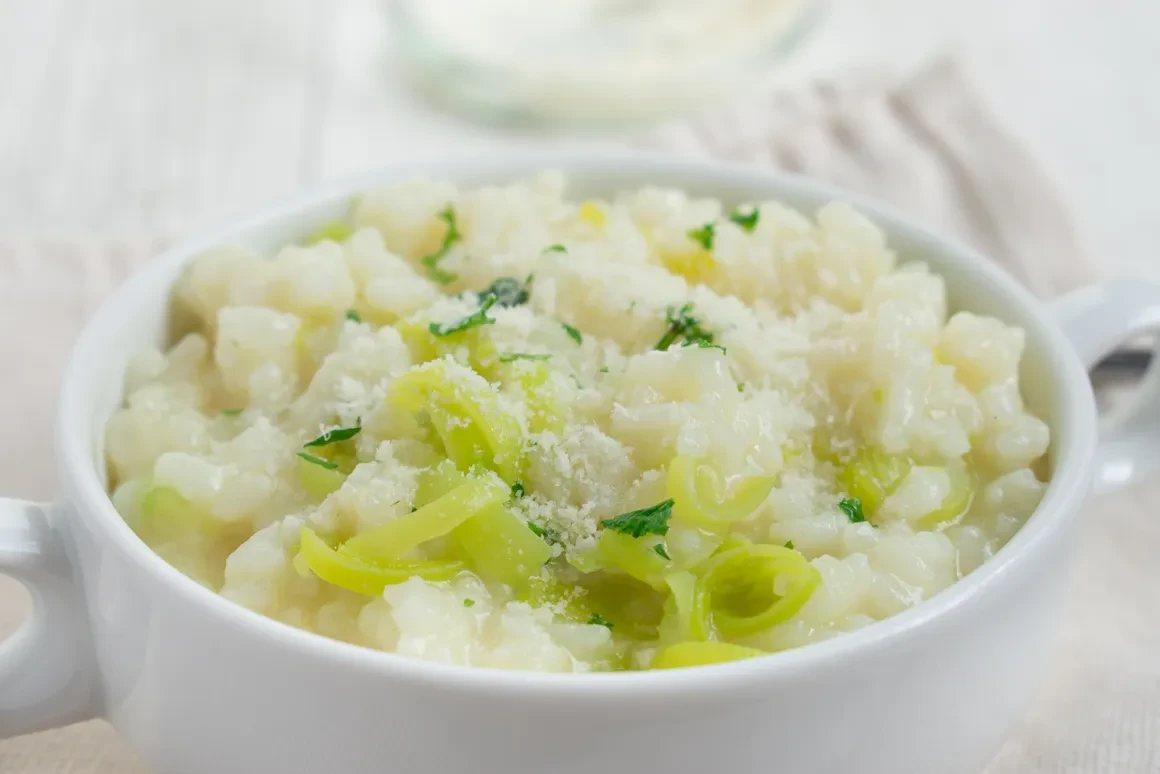
Rispor
Ryys und Porree · Rice with Leeks
As its name suggests, this dish from Uri is made with rice and leeks. The recipe is very old: its first traces go back to cookbooks of the 18th century.
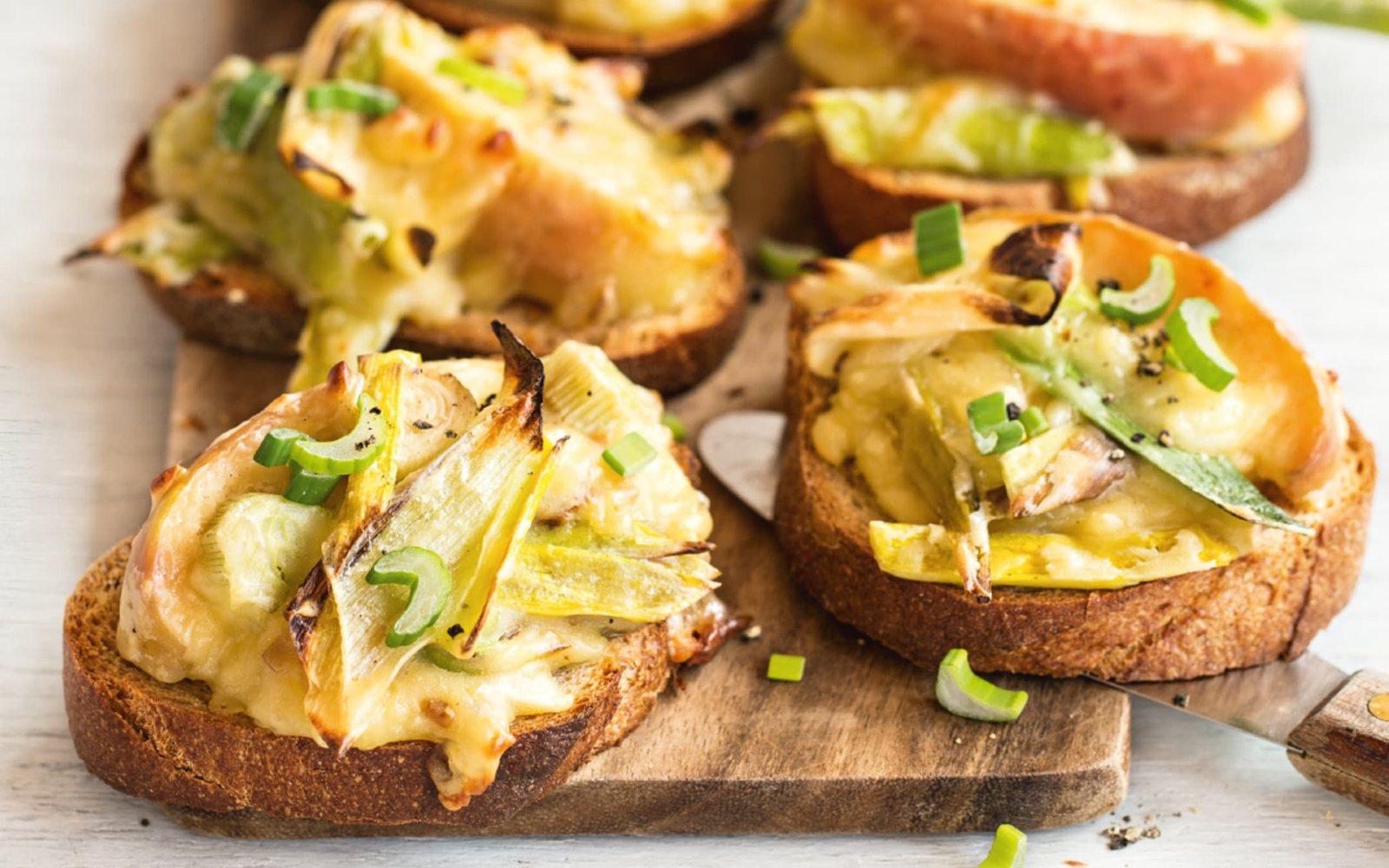

Thurgauer Käseschnitten
Thurgau Cheese Slices
Sometimes good things are simple: farmer's bread drizzled with apple juice, topped with apples, onion and Thurgau Tilsiter, and baked.